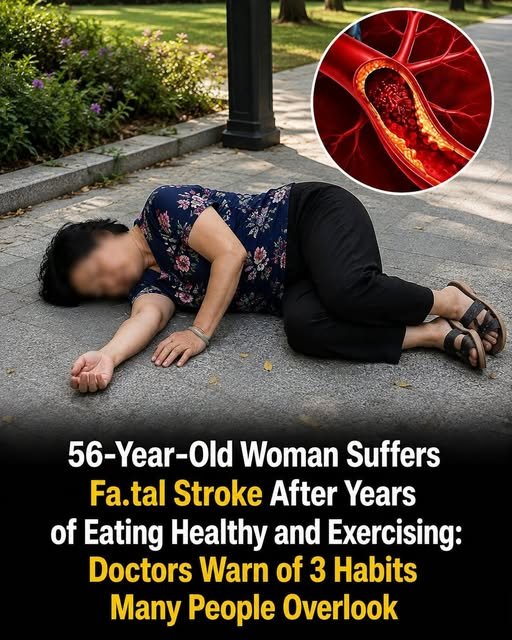
56-Year-Old Woman Suffers Fatal Stroke Despite Years of Healthy Eating and Exercise — What Everyone Over 50 Should Know
She ate healthy meals, stayed physically active, and tried to take care of her body. Yet the headline describes a 56-year-old woman who suffered a fatal stroke.
How can someone who follows a healthy lifestyle still experience a life-threatening stroke?
Although the details of this particular case have not been independently verified, the question highlights an important medical reality: healthy habits significantly reduce stroke risk, but they cannot eliminate it completely.
1. Why Healthy People Can Still Have Strokes
A stroke happens when blood flow to part of the brain is blocked or when a blood vessel in the brain ruptures.
There are two main types:
- Ischemic stroke: Caused by a blocked blood vessel supplying the brain.
- Hemorrhagic stroke: Caused by bleeding in or around the brain.
Even people who exercise regularly and eat nutritious foods can develop conditions that increase their stroke risk.
2. High Blood Pressure: The Silent Danger
High blood pressure is one of the most important modifiable risk factors for stroke.
Unfortunately, it often causes no noticeable symptoms.
Someone can appear physically fit and feel perfectly healthy while having dangerously elevated blood pressure.
Regular blood pressure checks are therefore essential, particularly after age 50.
3. An Irregular Heartbeat Can Increase Stroke Risk
Atrial fibrillation, commonly called AFib, is a heart rhythm disorder that can increase the likelihood of blood clots forming inside the heart.
If a clot travels to the brain, it can block blood flow and cause an ischemic stroke.
Some people with AFib experience heart palpitations, dizziness, or fatigue. Others have no symptoms at all.
4. Cholesterol Problems Can Exist Without Obvious Symptoms
A nutritious diet helps support cardiovascular health, but genetics can also influence cholesterol levels.
Some people inherit conditions that cause elevated LDL cholesterol despite maintaining healthy habits.
Over time, cholesterol-rich plaque can accumulate in blood vessels and contribute to cardiovascular disease.
5. Family History Matters
People with a family history of stroke, cardiovascular disease, or certain inherited disorders may face additional risks.
Genetics do not determine everyone’s future, but they can make preventive medical evaluations particularly important.
6. Women May Face Additional Risk Factors
Certain health conditions and life experiences can affect stroke risk in women.
These include:
- Pregnancy-related high blood pressure, including preeclampsia
- Certain types of migraine with aura
- Some estrogen-containing medications
- Atrial fibrillation
- High blood pressure and diabetes
Not everyone with these risk factors will experience a stroke. Individual risk depends on several interacting factors.
7. Warning Signs You Should Never Ignore
A stroke can happen suddenly. Remember the BE FAST warning signs:
- B — Balance: Sudden loss of balance or coordination.
- E — Eyes: Sudden vision problems.
- F — Face: One side of the face droops.
- A — Arms: Sudden weakness or numbness in an arm.
- S — Speech: Slurred speech or difficulty speaking.
- T — Time: Call emergency services immediately.
A sudden, unusually severe headache may also be a warning sign, especially with a hemorrhagic stroke.
Do not wait to see whether symptoms improve. Even symptoms that disappear can signal a transient ischemic attack (TIA), which requires emergency assessment.
8. How to Reduce Your Stroke Risk After 50
While no prevention strategy offers a 100% guarantee, several habits can meaningfully reduce risk.
- Monitor blood pressure regularly.
- Have cholesterol and blood glucose checked as recommended.
- Stay physically active.
- Eat a balanced diet rich in vegetables, fruits, whole grains, and other nutritious foods.
- Avoid smoking.
- Limit alcohol consumption.
- Maintain regular medical checkups, particularly if cardiovascular risk factors are present.
- Discuss persistent palpitations or an irregular heartbeat with your clinician.
Final Thoughts: A Healthy Lifestyle Still Matters ❤️
The most important message is not that healthy living fails.
Healthy eating and exercise remain powerful ways to reduce stroke risk, but regular screening and awareness of warning signs are also essential.
A person can look healthy while living with an undiagnosed cardiovascular condition.
Knowing your blood pressure, understanding your family history, and recognizing stroke symptoms can make a life-saving difference.
❤️ Are you over 50, or do you have someone you love who is?
💬 Comment “OK” if you believe more people should know the warning signs of stroke.
📢 Share this information with your family and friends. Awareness could help someone recognize a stroke and seek emergency care sooner.